
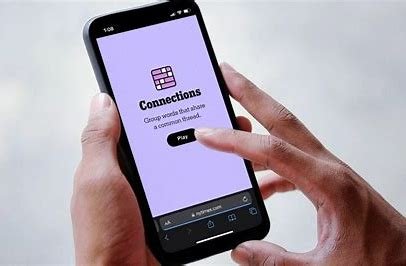
The New York Times’ Connections puzzle has become a daily brain teaser for word enthusiasts worldwide.
This seemingly simple game of categorizing words presents a delightful challenge that keeps players coming back for more. But those faced with a blank grid and a sea of unfamiliar terms might be wondering: how can I solve the NYT’s Connections puzzle more effectively?
Fear not, word warriors! This article equips you with the knowledge and strategies to conquer Connections, transforming you from a bewildered beginner to a Connections champion.
Understanding the Game: The Basics of Connections
You’re presented with a 4×4 grid containing sixteen words. The objective? To categorize these words into four groups of four, each sharing a common theme or connection.
Here’s a breakdown of the mechanics:
Identifying the Theme:
The key to solving Connections lies in pinpointing the underlying theme that binds four words together. This theme could be anything from synonyms and antonyms to materials and historical figures.
Trial and Error:
Don’t be afraid to experiment! Try placing words in different groups and see if the connections click. The NYT Connections interface allows you to test your hunches without penalty until you find the correct groupings.
Color Clues:
As you correctly categorize words, their corresponding squares in the grid will change color, providing valuable feedback. Each color represents a distinct group, guiding you towards the solution.
Mistakes and Penalties:
While experimentation is encouraged, there’s a catch. Making an incorrect guess (placing a word in the wrong group) incurs a penalty. After four wrong guesses, the puzzle resets, and you’ll need to start over.
Beyond the Basics: Advanced Strategies for Connections Mastery
Once you’ve grasped the fundamentals, here are some advanced strategies to elevate your Connections game:
Start with the Obvious:
Scan the board for words that seem like clear matches. Synonyms and antonyms often jump out, providing a solid foundation for building your groups.
Look for Overlapping Themes:
Some words might fit into multiple categories. Capitalize on this! A word like “river” could belong to a “bodies of water” group or a “geographical features” group. Identifying these versatile words can be a game-changer.
Think Outside the Box:
Don’t limit yourself to common associations. Connections can get creative! For instance, “apple” might connect with “doctor” through the concept of “health” or “Newton” through the realm of “gravity.”
Leverage the Power of Elimination:
As you make incorrect guesses, analyze the penalty messages. The NYT interface often provides clues about which words don’t belong together, helping you narrow down possibilities for other groups.
Practice Makes Perfect:
The more you play Connections, the more comfortable you’ll become with identifying themes and making connections. Don’t get discouraged by initial challenges; keep practicing, and you’ll see steady improvement.
Pro Tips and Online Resources to Amp Up Your Game
Here are some additional resources and tips to take your Connections game to the next level:

Utilize Online Resources:
Several websites and YouTube channels offer daily Connections hints and solutions. These resources can be a valuable safety net if you’re completely stuck, but be mindful not to rely on them heavily.
Play with a Friend:
Teaming up with a friend can be a fun and strategic way to solve Connections. Bouncing ideas off each other can spark new connections and lead to a quicker solution.
Time Yourself:
Challenge yourself to solve the puzzle within a specific timeframe. This adds an extra layer of difficulty and helps you develop your critical thinking skills under pressure.
Stay Curious:
Expand your vocabulary by reading widely and exploring new topics. The more knowledge you possess, the more connections you’ll be able to identify within the puzzle.
By implementing these strategies and utilizing the available resources, you’ll be well on your way to becoming a Connections master.
Remember, the beauty of this game lies in the challenge and the satisfaction of uncovering the hidden themes that bind the words together. So, sharpen your thinking caps, unleash your inner wordsmith, and conquer the daily Connections puzzle!
FAQs
Q: What exactly are “connections” in the context of the NYT?
Connections refer to the relationships, networks, and bridges we build between people, ideas, and events. The NYT often highlights how these connections shape our world.
Q: How does the NYT utilize connections in its reporting?
The NYT’s journalists leverage their connections to access unique sources, uncover hidden stories, and provide diverse perspectives within their articles.
Q: Can you give an example of connections in an NYT article?
An article might explore how a scientific discovery connects to real-world problems, or how a historical event has ongoing connections to the present day.
Q: How can I find NYT articles that explore connections?
Search for keywords like “connections,” “networks,” “relationships,” or specific topics that highlight interconnectedness (e.g., “climate change and social justice”).
Q: Are there any inspirational stories about the power of connection?
Many! From online communities supporting individuals to social entrepreneurs connecting resources to those in need, stories abound. Search online or in the NYT for such examples.
Q: What are some of the challenges associated with connection in the digital age?
Misinformation and echo chambers can pose challenges. It’s crucial to:
Critically evaluate information online:Verify sources and seek diverse perspectives.
Be aware of your own biases:Challenge your own assumptions and be open to new viewpoints.
Q: How can we use connection to create positive change?₹
Use your connection to:
Spread awareness about important issues:Share credible information and support relevant causes.
Mobilize communities:Connect people who share a common goal to take action.
Promote empathy and understanding:Foster connection across divides to build a better world.
Q: Are there any examples of connection creating positive change?
Social media campaigns raising funds for disaster relief or online communities supporting mental health are just a few examples. Search online for such stories.
Q: How will technology impact connection in the future?
Emerging technologies like virtual reality or AI might create new ways to connect, but:
The human element remains key: Meaningful connection will still require empathy and understanding.
Ethical considerations are crucial:We must ensure technology bridges divides, not widens them.
Q: What are some of the ethical considerations surrounding connection in the digital age?
Privacy concerns and the potential for manipulation through social media algorithms are important considerations.
To read more click here