
Talking about poop might not be the most pleasant topic, but it’s a vital part of our health. Our stools can offer valuable clues about our digestive health, and the Bristol Stool Chart is a handy tool to help you decipher what your bowel movements are trying to tell you.

The Poop Whisperer: Unveiling the Bristol Stool Chart
Developed by doctors Stephen Lewis and Kenneth Heaton at the Bristol Royal Infirmary in the UK, the Bristol Stool Chart is a visual guide that classifies stools into seven categories based on their appearance. By comparing your typical bowel movements to the chart, you can gain insights into your digestive function and identify potential issues.
A Visual Guide to the Stool Spectrum
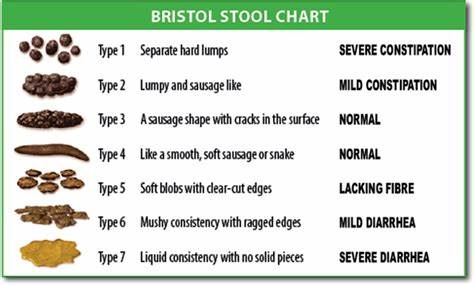
The Bristol Stool Chart features seven distinct types of stools, each with a corresponding description and image:
Type 1: Separate hard lumps, like nuts (difficult to pass) This indicates constipation. Hard stools can be painful to pass and may be a sign of insufficient fiber intake or dehydration.
Type 2: Sausage-shaped, but lumpy: Still on the constipated side, these stools indicate some difficulty in passing. Increasing fiber intake and staying hydrated can help.
Type 3: Like a sausage but with cracks on its surface: This is considered the ideal stool consistency. It passes easily without straining.
Type 4: Like a sausage or snake, smooth and soft: Another ideal stool type, indicating a well-balanced diet and efficient digestion.
Type 5: Soft blobs with clear cut edges: These stools are on the softer side and might indicate that food is moving too quickly through your digestive system. It might not be a cause for concern unless accompanied by diarrhea.
Type 6: Fluffy pieces with ragged edges, a mushy stool: Diarrhea is evident here. This could be caused by a variety of factors, such as a viral infection, food intolerance, or stress.
Type 7: Watery, no solid pieces, entirely liquid: This is severe diarrhea and requires immediate hydration to prevent dehydration and electrolyte imbalance.
Beyond the Chart: Additional Factors to Consider
The Bristol Stool Chart is a helpful tool, but it’s important to consider other factors alongside the stool appearance:
Frequency: How often you have bowel movements can also be indicative of digestive health. Aim for regularity, ideally once a day.
Straining: Straining during bowel movements can be a sign of constipation.
Blood: The presence of blood in your stool can indicate various issues and requires medical evaluation.
Pain: Pain during bowel movements shouldn’t be ignored. To rule out any underlying issues, speak with your physician.

When to See a Doctor
See your physician if you encounter any of the following symptoms:
Persistent constipation or diarrhea (lasting more than a few days)
Blood in your stool
Severe abdominal pain
Unexplained weight loss
Taking Control of Your Digestive Health
A functioning digestive system is necessary for general health. Here are some tips to promote healthy digestion and maintain ideal stool consistency:
Increase fiber intake: Fiber adds bulk to your stool and aids smooth passage. Aim for 25–35 grams of fiber per day from whole grains, fruits, and vegetables.
Stay hydrated: Drinking plenty of water keeps your stool soft and prevents constipation.
Manage stress: Chronic stress can disrupt digestion. Practice relaxation techniques like yoga or meditation.
Consider probiotics: Probiotics are live bacteria that can improve gut health and regulate digestion.
Listen to your body: Pay attention to your body’s natural bowel movement rhythm. Don’t ignore the urge to go.
Remember: The Bristol Stool Chart is a general guide. If you have any concerns about your bowel movements, consult your doctor for personalized advice and diagnosis.
The Final Word: Opening the Dialogue About Digestive Health
Talking about poop might feel awkward, but it shouldn’t be taboo. By understanding your stools and using the Bristol Stool Chart as a guide, you can take charge of your digestive health and promote overall well-being.
Remember, open communication with your doctor is key for optimal gut health and overall well-being.

FAQs
Ever looked at your bowel movement and wondered, “Is this normal?” The Bristol Stool Chart (BSC) is your key to understanding what your poop says about your digestive health. This FAQ dives into the world of the BSC, addressing those questions popping up on Youtube and Google searches.
What is the Bristol Stool Chart?
The Bristol Stool Chart is a seven-point scale that categorizes different types of stool based on their shape, consistency, and ease of passage. It’s a tool used by medical professionals and curious individuals alike to assess gut health.
What are the different types of stool on the Bristol Stool Chart?
The chart categorizes stool into seven types:
Type 1: Separate hard lumps (difficult to pass) – Constipation
Type 2: Sausage-shaped, but lumpy – Possible constipation
Type 3: Like a sausage but with cracks on its surface – Ideal stool, easy to pass
Type 4: Smooth and supple, like to a sausage or snake – the perfect stool
Type 5: Soft blobs with clear cut edges – May indicate tendency towards diarrhea
Type 6: Fluffy pieces with ragged edges, mushy stool – Diarrhea
Type 7: Watery diarrhea that is completely liquid with no solid bits
What do the different types of stool on the Bristol Stool Chart mean?
Types 1 & 2: Indicate constipation, where stool moves slowly through your intestines, causing it to harden.
Types 3 & 4: Considered ideal, as they represent well-formed stool that passes easily.
Types 5, 6 & 7: Indicate diarrhea, where stool moves too quickly through the intestines, resulting in loose or watery stools.
Why is the Bristol Stool Chart important?
The BSC can’t diagnose medical conditions, but it can be a helpful tool for:
Monitoring your gut health: Tracking your stool consistency over time can help identify potential issues.
Starting a conversation with your doctor: The BSC can be a reference point when discussing bowel habits with a healthcare professional.
What are some Youtube misconceptions about the Bristol Stool Chart?
Color doesn’t matter: While some conditions might cause unusual stool colors, the BSC focuses on shape and consistency.
It diagnoses medical conditions: The BSC is a tool, not a diagnostic test. If you have concerns, see a doctor.
Should I see a doctor if my stool consistently falls outside the ideal range (Types 3 & 4)?
Yes. While occasional variations are normal, persistent constipation or diarrhea can indicate underlying issues. A doctor can help identify the cause and recommend treatment.
Where can I find a Bristol Stool Chart?
You can find the Bristol Stool Chart online or in some medical resources. Here are some reputable sources:
Continent of Australia Continence Foundation [invalid URL removed]
WebMD
Remember: The Bristol Stool Chart is a valuable tool for understanding your gut health. By familiarizing yourself with the different types and what they might indicate, you can take proactive steps towards a healthier digestive system. But if you have persistent concerns, always consult a medical professional.
To read more, Click Here.