
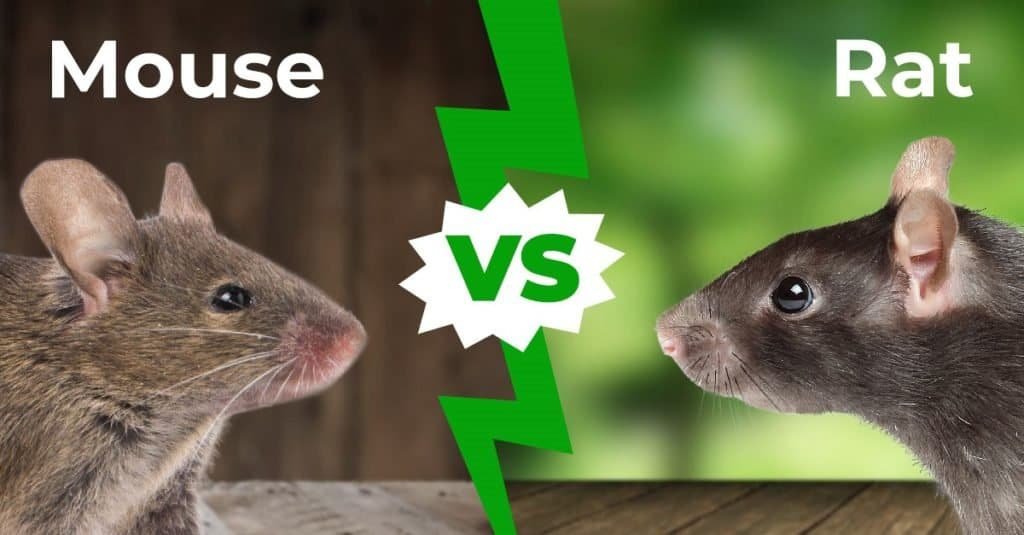
Mice vs Rats, Those scurrying shadows in the corner of your vision, the pitter-patter of tiny feet in the walls – mice and rats, unwelcome guests in many a home. While both are common rodents, these critters have distinct characteristics that set them apart. Let’s delve into the fascinating – and sometimes frightful – world of mice and rats, exploring the differences in size, behavior, diet, and the best ways to keep them out of your house.

Size Matters: A Tale of Tails and Ears
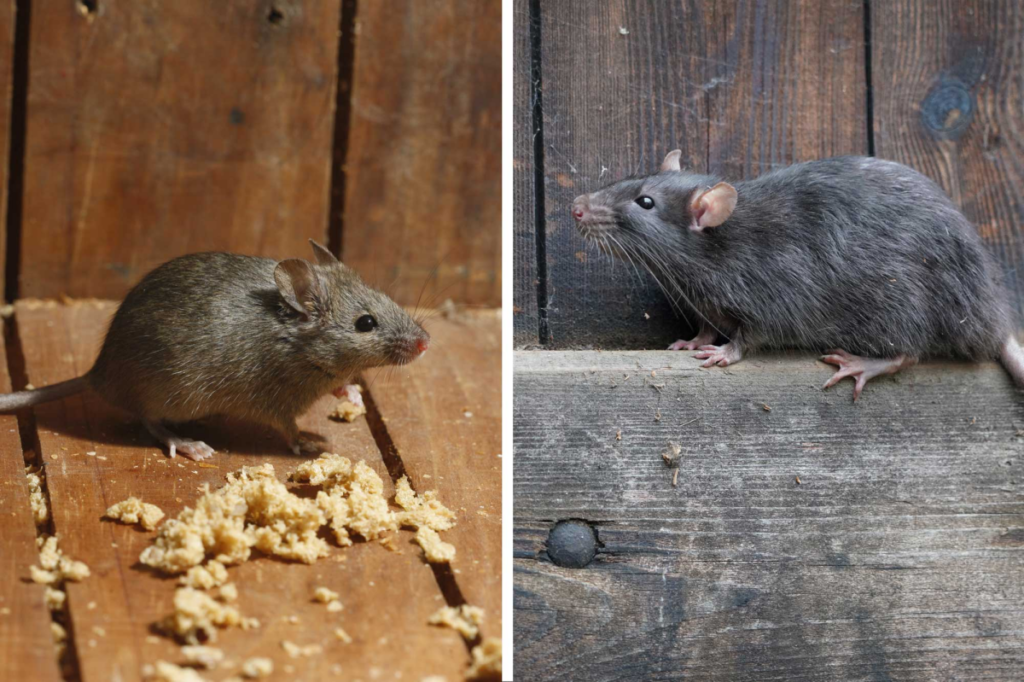
Rats are the bruisers of the rodent world, with brown rats, the most common house rat species, measuring 16-40 cm (6-16 inches) in length, excluding the tail. House mice, on the other hand, are much smaller, typically measuring 3-10 cm (1-4 inches) in length. This size difference extends to their tails – a rat’s tail is thicker, shorter, and often hairless, while a mouse’s tail is long, thin, and covered in fine hairs.
Another key giveaway is their ears and snouts. Mice have large, floppy ears that often protrude well past their heads. In contrast, rats have smaller ears with a more rounded shape. The snouts also differ – a mouse has a pointed, triangular snout, while a rat’s snout is blunter and more rounded.
Fearless Fuzzballs or Cautious Critters: Behavioral Differences
Despite their smaller stature, mice can be surprisingly bold. Their curious nature often leads them to explore new areas, making them more likely to fall prey to traps. Rats, on the other hand, are much more cautious. They have a strong sense of smell and will avoid unfamiliar objects, making them more challenging to eradicate. This difference in temperament makes snap traps more effective for mice, while for rats, professional pest control with poison bait stations might be necessary.
When it comes to living arrangements, mice prefer to nest in wall cavities, attics, and other hidden spaces. They are excellent climbers and can squeeze through holes as small as a dime. Rats, being larger, tend to burrow underground or nest in basements and crawlspaces. Both mice and rats are social creatures, living in colonies with complex hierarchies.
Dietary Delights: What’s on the Menu?
Both mice and rats are omnivores, meaning they eat a variety of things. However, their preferences can differ slightly. Mice tend to be more granivorous, meaning they favor grains, seeds, and cereals. They’ll also happily munch on fruits, vegetables, and even insects. Rats, being larger, have a more diverse diet. They’ll consume grains, fruits, and vegetables, but they’re also not above scavenging for meat scraps and pet food. This adaptability allows them to thrive in a wider range of environments.
One interesting fact – both mice and rats are coprophagic, meaning they eat their own droppings. This behavior allows them to extract additional nutrients from their food and helps maintain gut bacteria.
Destructive Dining: The Trouble with Rodents
Whether it’s mice or rats, having these uninvited guests in your home can be a real nuisance. They can chew on electrical wires, damaging appliances and potentially causing fires. They can also contaminate food and surfaces with their droppings, spreading diseases like salmonella and hantavirus. Additionally, their constant gnawing can damage furniture, insulation, and even walls.
Keeping Your Home Rodent-Free: Prevention is Key
Here are some effective prevention tips:
Seal up entry points: Inspect the exterior of your home for cracks, holes, and gaps around pipes and wires.
Store food properly: Keep food in airtight containers and don’t leave crumbs or spills on counters.
Dispose of garbage properly: Use trash cans with tight-fitting lids and empty them regularly. Compost piles should be kept far away from the house.
Reduce clutter: Clutter provides hiding places for mice and rats. Keep your home clean and organized, especially in areas like garages and basements.
FAQ’S
Spot the Difference: Size Showdown
The most glaring giveaway? Size! Rats are the heavyweight champions, measuring 16-40 cm (6-16 inches) long, excluding the tail. Mice, on the other hand, are lightweight contenders at a mere 7-10 cm (3-4 inches) minus the tail.
Tale as Old as Time: Tails Tell a Story
Take a peek at those tails! A rat’s tail is thick, scaly, and hairless, while a mouse’s tail is thin, hairy, and often longer than its body.
Face Off: Features in Focus
Peek at their mugshots! Rats have blunt snouts and smaller ears compared to their head size. Mice, however, sport pointy snouts and large, conspicuous ears.
Dietary Delights: What’s on the Menu?
Both mice and rats are omnivores, but their preferences differ slightly. Mice tend to be more herbivorous, nibbling on grains and seeds. Rats, the less picky eaters, will happily munch on anything from meat and fruits to pet food and electrical wires (yikes!).
Living Quarters: Where Do They Crash?
Mice are excellent climbers and nest builders, often creating cozy homes in wall cavities, attics, and even inside furniture. Rats, however, prefer the ground game, burrowing under buildings and along foundations.
The Family Feud: Reproduction Rampage
Both mice and rats are prolific breeders. A female mouse can have 5-10 litters per year, with 5-6 pups each! Rats are slightly less productive, with around 6 litters per year and 6-12 pups each. Shudder!
Night Shift: When Do They Party?
These nocturnal creatures are most active at night, when humans are blissfully asleep (or trying to be!).
Super Senses: Sneaking Around Unseen
Despite poor eyesight, both mice and rats have a super sense of smell and hearing, allowing them to navigate their environment with ease and avoid danger (or cheese traps!).
The Destructive Duo: How Do They Cause Havoc?
Both mice and rats can chew through wires, gnaw on furniture, and contaminate food with their droppings, causing damage and spreading diseases.
Friend or Foe? The Role of Rodents in the Ecosystem
While unwelcome guests in our homes, mice and rats play a vital role in the ecosystem. They help pollinate plants, disperse seeds, and control insect populations.
Keeping it Critter-Free: How to Get Rid of Mice and Rats?
Prevention is key! Seal up any cracks or holes in your home, store food in airtight containers, and keep your garbage cans tightly sealed. If you suspect an infestation, contact a professional pest control service.
Bonus Round: Are there any friendly Mice or Rats?
Believe it or not, some species of mice and rats are actually quite social and intelligent! Fancy rats, for example, are popular pets, while some species of field mice are crucial for scientific research.
To read more, Click here