
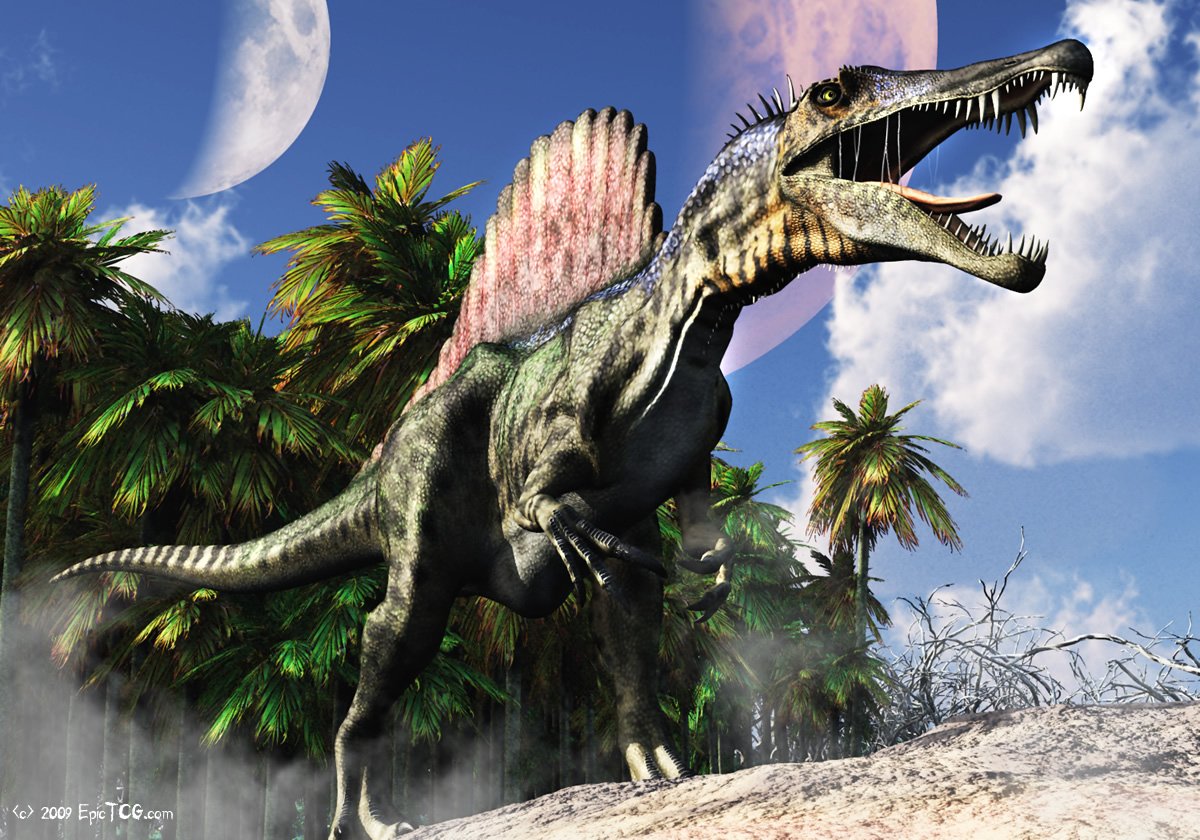
The Spinosaurus, with its sail and elongated snout, remains one of the most captivating dinosaurs to have ever roamed the Earth. Its unique anatomy and ongoing scientific discoveries continue to spark debate and fascination among paleontologists and dinosaur enthusiasts alike. This article delves into the world of the Spinosaurus, exploring its physical characteristics, paleobiology, and the ongoing debate surrounding its lifestyle.
A Colossal Creature:

The Spinosaurus was a true giant of the Cretaceous period, estimated to have reached lengths of up to 50 feet and weighing in at around 20 tons. These colossal predators dwarfed even the mighty Tyrannosaurus Rex, making them the largest theropods (two-legged, meat-eating dinosaurs) ever discovered. However, unlike most theropods, the Spinosaurus possessed a number of unique physical features that set it apart.
The Enigmatic Sail:
Perhaps the most striking feature of the Spinosaurus is its immense sail, a tall fin composed of neural spines that extended from the back vertebrae. The function of this sail remains a subject of debate. Some theories suggest it served as a display structure to attract mates or intimidate rivals. Others propose it may have helped regulate body temperature or served as a source of muscle attachment for powerful swimming strokes.
A Hunter on Land and in Water:
Recent discoveries have shed light on the Spinosaurus’ possible semi-aquatic lifestyle. Unlike most theropods, the Spinosaurus’s snout is long and narrow, resembling that of a crocodile. Its teeth are conical, adapted for catching fish rather than tearing flesh. Additionally, its legs are shorter and more robust than those of land-dwelling theropods, suggesting it may have spent a significant amount of time wading in water. This hypothesis is further supported by the discovery of fossilized fish scales and bones in its stomach contents.
The Debate Heats Up: Terrestrial Terror or Aquatic Ace?
The idea of a semi-aquatic Spinosaurus has sparked controversy within the paleontology community. While some studies support this notion, others argue that the evidence is inconclusive. They point out that the Spinosaurus’s robust forelimbs and powerful claws still suggest an ability to hunt land prey effectively. Additionally, some argue that the fish remains found in its stomach could have been scavenged rather than actively hunted.
The Fossil Record: A Jigsaw Puzzle with Missing Pieces
Understanding the Spinosaurus is further complicated by the fragmentary nature of the fossil record. The most complete Spinosaurus skeleton, nicknamed “Spinozilla,” was destroyed in a tragic bombing in 2015. Paleontologists rely on a collection of isolated bones and teeth scattered across various locations in North Africa, making it difficult to reconstruct a complete picture of the Spinosaurus’s anatomy and behavior.
New Discoveries and Ongoing Research
Despite the challenges, new discoveries continue to shed light on the Spinosaurus. Footprints discovered in Morocco in 2020 suggest the dinosaur may have been a proficient swimmer. Additionally, ongoing research on its bone structure and biomechanics aims to better understand its movement patterns on land and in water.
Beyond the Debate: A Captivating Creature
While the debate surrounding its lifestyle continues, there’s no denying the captivating nature of the Spinosaurus. Its unique anatomy and the ongoing scientific quest to understand it solidify its place as one of the most fascinating dinosaurs ever discovered.
A Look at Popular Culture:

The Spinosaurus has captured the imagination of popular culture as well. It has featured in films like “Jurassic Park III,” where it was depicted in a more terrestrial role, and video games like “ARK: Survival Evolved,” where players can encounter and tame this formidable predator. These portrayals, while not always scientifically accurate, highlight the public’s continued fascination with this enigmatic dinosaur.
The Future of Spinosaurus Research
As paleontological research continues, we can expect to learn more about the Spinosaurus’s life and behavior. New fossil discoveries, advancements in technology, and ongoing analysis of existing data will hopefully provide a clearer picture of this colossal predator. Whether it was a fearsome land dweller, a cunning scavenger, or a master of both land and water, the Spinosaurus is sure to remain a topic of debate and fascination for years to come.
So, what can we definitively say about the Spinosaurus?
It was a colossal theropod with a unique sail on its back.
Its long snout and teeth suggest it may have fed on fish.
Recent discoveries hint at a possible semi-aquatic lifestyle.
The debate surrounding its exact lifestyle is ongoing.
FAQs
Q: What was the Spinosaurus?
A: The Spinosaurus was a gigantic theropod dinosaur, meaning it walked on two legs and belonged to the same group as Tyrannosaurus Rex. It lived in what is now North Africa during the Cretaceous period (around 112-97 million years ago).
Q: How big was a Spinosaurus?
A: The Spinosaurus was a true behemoth. Estimates vary, but it’s believed to be one of the largest carnivores ever to walk the Earth. It could reach lengths of up to 50 feet (15 meters) and possibly weigh in at an impressive 20 tons!
Q: What’s the deal with the big sail on its back?
A: The sail is the Spinosaurus’ most distinctive feature. Theories abound about its function:
A Thermoregulatory Tool: Some suggest it helped regulate body temperature, acting like a radiator to cool down in the hot African sun.
A Display Structure: Others propose it served as a display for attracting mates or intimidating rivals.
A Signaling Device: The sail might have been used for communication within Spinosaurus populations.
Q: Did the Spinosaurus live on land or in water?
A: This is a hotly debated topic! Recent discoveries suggest the Spinosaurus may have been a semiaquatic predator, spending significant time in water. Its elongated body, powerful tail, and possible webbed feet might have made it an efficient swimmer.
Q: What did the Spinosaurus eat?
A: With its long, slender snout and conical teeth, the Spinosaurus likely had a different diet than most theropods. It’s believed to have been an opportunistic predator, feeding on fish, reptiles, and even carrion (dead animals) found near water sources.
Q: How was the Spinosaurus discovered?
A: The first Spinosaurus fossils were discovered in Egypt in 1912 by a German paleontologist. Unfortunately, these remains were destroyed during World War II. Thankfully, further discoveries of Spinosaurus bones throughout North Africa have allowed scientists to piece together a more complete picture of this amazing creature.
Q: Where can I learn more about the Spinosaurus?
A: Dive deeper into the world of Spinosaurus with these resources:
Museums: Many natural history museums have Spinosaurus exhibits, allowing you to see reconstructed skeletons and learn more about its anatomy.
Documentaries: Explore documentaries on Youtube or streaming platforms that delve into the latest research and bring the Spinosaurus to life with CGI animation.
Scientific Articles: For a deeper dive, reputable scientific websites and journals might offer research papers on Spinosaurus anatomy, behavior, and its place in the dinosaur ecosystem.
The Spinosaurus continues to be a fascinating subject of paleontological research. As new discoveries are made, our understanding of this giant predator continues to evolve.
To Read More; click here