
A single audio clip generates hundreds of thousands of variations that attract each of their own audiences. Here lies the magic of lip syncing.
And it’s not by happy chance either. With tools like Pippit allowing for easy syncs between voices and images with sophisticated software, brands are learning that they don’t necessarily require new content to become viral. At times, it’s all about catching up on the wave at the right moment. With AI video generator technology at its center, Pippit enables creators to ride such waves and catch up on them across the world.
The contagious nature of recognition
Why are lip-synced audios shared more widely than originals? A large reason is recognition. When the audience already recognizes the sound, they don’t waste time decoding it. They immediately recognize the beat, the tone, or the punchline. That recognition makes them curious: how will this creator place their twist on it?
It’s similar to listening to a beloved joke repurposed by various comedians. The joke isn’t just in the original statement but also in how it is said. Lip sync trends have success because of this dance between familiarity and innovation.
Lip sync AI as the unseen booster
Lip syncing is not about lip movement to sounds—it’s about credibility. Through lip sync AI, producers can now sync avatars or their own material with audios so realistically that audiences don’t even notice it’s an overlay. This is where amplification occurs. The more realistic the sync looks, the more immersive the video is, and the higher the chances of sharing.
This is why brands are moving in this direction too. A clean lip sync gives a campaign that finishing sheen, even if it was cobbled together in a fraction of the time of traditional production.
Memes, remixes, and the snowball effect
After an audio begins trending, it snowballs. Memes pop up, subcultures remix it, and suddenly it’s not just a clip anymore—it’s a moment for the community.
Lip syncing drives this because it enables creators to join in immediately without costly equipment. No use for studio recording. Sync against the available audio and worry about presenting your version. This reduces entry and speeds up joining in, which is why these audios tend to dominate platforms for weeks.
Some of the main reasons lip synced audios snowball quicker:
- Speed of adoption: creators can get in within minutes.
- Cultural layering: various groups rework the same audio to fit their own in-jokes.
- Algorithmic love: sites promote audios with greater reuse rates, i.e., more exposure for each creator involved.
When a translator becomes a trendsetter
Interestingly, lip syncing also borders translation. Picture a joke, a film line, or a viral sound that is done in one language. A video translator will make it available in other languages, yet lip syncing preserves the magic. Substituting subtitles, the public receives the complete sensory experience in their own language.
This makes trends global in real time. A sound that began in Spanish could go viral in English, Japanese, and Arabic because lip syncing closes the divide. Suddenly, an in joke is now a worldwide meme.
Emotional timing trumps originality
Original audios are wonderful for authenticity, but they don’t necessarily promise reach. Lip synced audios, however, speak to shared emotions at exactly the right time.
To illustrate:
- A dramatic soundtrack lip synced with ordinary office drudgery adds irony.
- A romantic dialogue lip synced with animals is funny.
- A motivational speech lip synced with exercise clips motivates.
What is important here isn’t the novelty of the audio but the timing. The sync makes it relatable, amusing, or inspiring—something that makes others want to watch, rewatch, and share.
Avatar magic: three easy steps to lip sync videos with Pippit
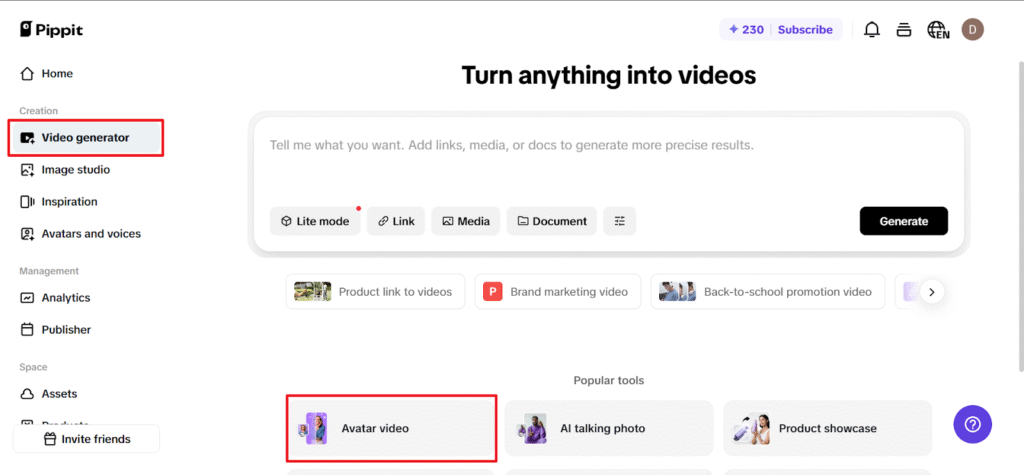
Step 1: Go to Pippit’s video generator and choose avatars
Log into Pippit and select Video generator from the left-side menu. Under Popular tools, select Avatars. Here, you can select from a variety of AI avatars that will perfectly harmonize with your selected audio.
Step 2: Add an avatar and edit the script
Once inside, select your preferred avatar by attributes such as industry, vibe, or gender, and modify the script to match the audio you’re syncing with. Pippit makes sure the avatar syncs with your video organically, without seeming too fake or overly edited. To make the tale even better, use caption styles.

Step 3: Get your avatar video
After fine-tuning with text overlays, background music, or minor expression changes, export in the format of your choice. Alternatively, skip downloads altogether and use Pippit’s Publisher feature to directly share to destinations such as TikTok, Instagram, or Facebook. Viral readiness at the click of a button.

The speed factor that algorithms love
Social media algorithms favor audios that are used repeatedly. Each time a creator uses a popular sound and lip syncs to it, the platform elevates that audio further, catapulting it to new audiences. That creates a loop: the more creators lip sync, the more exposure the audio receives, and the quicker it spreads.
Original audios do not often profit from this loop because they begin at zero. Lip synced audios, however, come into the algorithm with momentum already established.
Conclusion: sync into the spotlight with Pippit
Lip synced audios are more viral because they live on recognition, emotional timing, and algorithmic bias. They are intimate but not unique, personal but universal. For creators and brands, they are an opportunity to stand in the spotlight without having to invent the wheel.
Anyone may easily get involved in this remix culture with Pippit. It’s designed to help you make a huge impact without compromising the originality of your work, with features like AI avatars and professional lip syncing. If you want to exploit viral sounds to make your next big hit, Pippit is your backstage access to global stardom.
Read More: click here