
In Canada, the concept of a “basic wage” often gets confused with the minimum wage. While both terms deal with income, they have distinct meanings.
This article delves into the intricacies of minimum wage in Canada, exploring its variations across provinces and territories, factors influencing its increase, and how it impacts your earnings.

Minimum Wage vs. Basic Wage: Understanding the Difference
Minimum Wage:
This is the lowest legal hourly rate an employer can pay their employees. It’s a federally mandated standard with variations across provinces and territories.
Basic Wage (Guaranteed Annual Income):
This is a broader concept, referring to a government program that provides a set minimum income to all citizens, regardless of employment status. Canada currently does not have a national Basic Wage program.
Minimum wage acts as a safety net, ensuring workers receive a basic level of compensation for their labor.
The Minimum Wage Landscape in Canada: A Provincial Breakdown
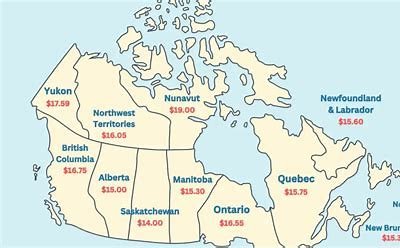
Canada’s minimum wage is not a one-size-fits-all policy. Each province and territory sets its own minimum wage, often reflecting the cost of living in that particular region. Here’s a breakdown of the current minimum wage rates across Canada (as of July 7th, 2024):
Nunavut: $17.59 (highest in Canada)
Northwest Territories: $17.25
Yukon: $17.30 (effective April 1, 2024)
British Columbia: $17.40 (effective June 1, 2024)
Alberta: $15.72
Saskatchewan: $13.80
Manitoba: $15.55
Ontario: $16.55 (increasing to $17.20 on October 1, 2024)
Quebec: $15.25 (increasing to $16.00 on October 1, 2024)
New Brunswick: $15.50
Nova Scotia: $13.60 (increasing to $14.50 on April 1, 2025)
Prince Edward Island: $14.50
Newfoundland and Labrador: $14.50
Keep in mind, these minimum wage rates are subject to change. Provinces and territories typically review and adjust their minimum wage rates annually, often based on the Consumer Price Index (CPI), which measures inflation.
What about federally regulated industries?
Canada also has a federal minimum wage that applies to employees working in industries under federal jurisdiction, such as banking, postal services, and air transportation.
The current federal minimum wage is $17.30 (as of April 1, 2024). If a province or territory has a higher minimum wage, the higher rate applies.
Minimum Wage Increases: Balancing Needs and Realities
The debate surrounding minimum wage increases is a constant one in Canada. Proponents argue that raising the minimum wage ensures a living wage for workers, improves their quality of life, and stimulates the economy through increased spending.
Opponents express concerns that higher minimum wages can burden businesses, leading to reduced employment opportunities or higher prices for consumers.
The federal government and provincial/territorial governments weigh these arguments when deciding on minimum wage increases. Factors like inflation, cost of living, and potential economic impacts are all considered during the review process.

How Does Minimum Wage Affect You?
The minimum wage directly impacts your earnings if you work in a non-exempt position (most jobs) and your employer pays you an hourly rate. Here’s how it works:
Earning Minimum Wage:
If you are employed in a position that pays the minimum wage in your province or territory, you will legally be entitled to receive at least that hourly rate for all hours worked.
Earning Above Minimum Wage:
If your skills, experience, or the nature of your position warrant a higher wage, your employer can offer you a rate above the minimum wage. Negotiations or established salary structures within your workplace might determine your specific pay.
Minimum wage is not a guaranteed income. It’s the baseline hourly rate, and your total earnings will depend on the number of hours you work. Working full-time (around 40 hours per week) will result in a higher overall income compared to working part-time (less than 40 hours per week).
FAQs
Q: Does Canada have one national minimum wage?
A: No, Canada has a federal minimum wage that applies to federally-regulated industries, and each province and territory sets its own minimum wage.
Q: What’s the current federal minimum wage in Canada (July 2024)?
A: The federal minimum wage is $17.30 per hour.
Q: How often is the federal minimum wage adjusted?
A: It’s automatically adjusted each year on April 1st based on the Consumer Price Index (CPI).
Q: Which province or territory has the highest minimum wage?
A: As of July 2024, Nunavut has the highest minimum wage at $17.59 per hour.
Q: Which province or territory has the lowest minimum wage?
A: As of July 2024, Saskatchewan has the lowest minimum wage at $13.00 per hour.
Q: Do some provinces have different minimum wages for different types of workers (e.g., students)?
A: Yes, some provinces and territories have different minimum wage rates for students, liquor servers, or other categories of workers. Check your provincial or territorial government website for details.
Q: Is minimum wage enough to live on in Canada?
A: The minimum wage may not be enough to cover the cost of living in all parts of Canada. A “living wage” is a higher hourly rate that’s estimated to cover basic necessities.
Q: Where can I find information about living wages in Canada?
A: You can visit the websites of organizations like the Canadian Centre for Policy Alternatives (Living Wage Canada [invalid URL removed]) to find information about living wages in different regions of Canada.
Q: I’m getting paid less than the minimum wage. Is that legal?
A: No, it’s illegal for employers to pay their employees less than the minimum wage.
Q: What should I do if I’m not being paid minimum wage?
A: You can contact your provincial or territorial ministry of labour to file a complaint.
Q: Am I entitled to overtime pay if I work more than a certain number of hours per week?
A: Yes, most provinces and territories have laws requiring employers to pay overtime pay for hours worked beyond a standard workweek (usually 40 hours).
Q: How often are minimum wages in provinces and territories adjusted?
A: The frequency of adjustments varies by province and territory. Some adjust annually, while others adjust less frequently.
Q: How are minimum wage increases decided?
A: Minimum wage increases are determined by provincial and territorial governments, and factors like the cost of living and inflation are often considered.
Q: Where can I find information about minimum wage requirements for employers?
A: You can visit the website of your provincial or territorial government’s labour department.
To read more click here