
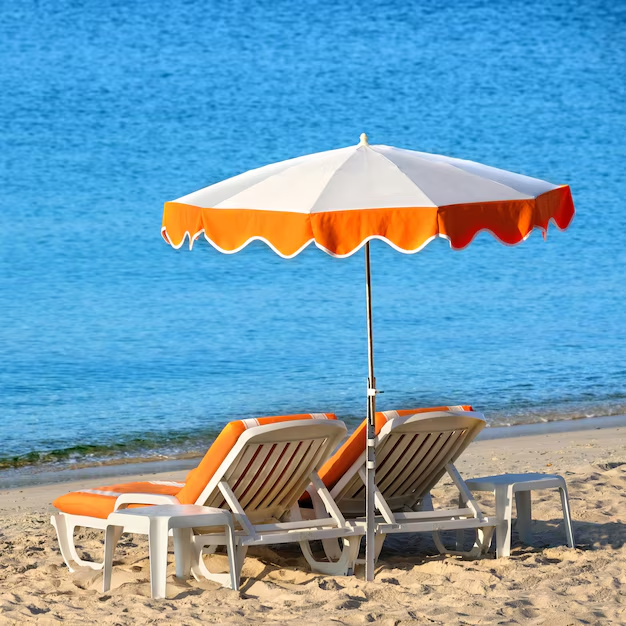
Introduction
A beach day is synonymous with sun, sand, and surf. However, prolonged exposure to the sun’s harmful UV rays can dampen the fun. This is where a beach umbrella comes to the rescue. More than just a shade provider, a beach umbrella is a crucial accessory for enjoying a safe and comfortable day at the beach. Let’s delve into the world of beach umbrellas.

Understanding the Beach Umbrella
A beach umbrella is a specialized umbrella designed to withstand the harsh conditions of the beach environment. Unlike its indoor counterpart, it is typically larger, sturdier, and equipped with features like a tilted canopy and a sturdy base to anchor it in the sand.
Key Components of a Beach Umbrella:
Canopy: The top part that provides shade.
Ribs: The framework supporting the canopy.
Shaft: The central pole of the umbrella.
Base: The weighted part that anchors the umbrella.
Why You Need a Beach Umbrella
Sun Protection: The most obvious reason is to shield yourself from the sun’s harmful UV rays, reducing the risk of sunburn and skin cancer.
Comfort: Provides a cool, shaded area to relax and enjoy the beach.
Functionality: Can be used as a windbreak, offering protection from gusty winds.
Style: Available in various colors, patterns, and sizes to match your personal style.
Choosing the Right Beach Umbrella
Size: Consider the number of people you’ll be sharing the umbrella with.
Material: Opt for water-resistant, UV-protective fabrics.
Tilt: A tilting mechanism offers flexibility in adjusting shade.
Base: Choose a sturdy base that can withstand windy conditions.
Portability: Consider the ease of carrying and setting up the umbrella.
Setting Up Your Beach Umbrella
Proper setup is essential for a secure and enjoyable experience:
Choose Your Spot: Select a location with firm sand for better stability.
Assemble the Umbrella: Follow the manufacturer’s instructions.
Insert the Base: Dig a hole in the sand and firmly insert the base.
Adjust the Tilt: Position the canopy to provide optimal shade.
Beach Umbrella Safety
While beach umbrellas offer numerous benefits, it’s crucial to prioritize safety:
Wind Warnings: Be aware of wind conditions and consider taking down the umbrella during strong gusts.
Secure Anchoring: Ensure the base is firmly planted in the sand.
Child Safety: Keep children away from the umbrella, especially when it’s windy.
Umbrella Etiquette: Be mindful of others on the beach when setting up and using your umbrella.
Beach Umbrella Innovations
The beach umbrella industry is constantly evolving with innovative designs:
Pop-up Umbrellas: Quick and easy to set up.
Solar-Powered Umbrellas: Incorporate solar panels for charging devices.
LED-Lit Umbrellas: Create a magical ambiance at night.
Umbrella Anchors: Enhance stability in windy conditions.
Beach Umbrella Care
To prolong the life of your beach umbrella:
Dry Thoroughly: Allow the umbrella to dry completely before storing.
Proper Storage: Store in a cool, dry place away from direct sunlight.

FAQs
Choosing the Right Beach Umbrella
What is the best size for a beach umbrella?
The ideal size depends on how much shade you need. Common sizes range from 6 to 9 feet. Larger umbrellas offer more shade but are heavier and bulkier. Consider the number of people you’ll be sharing the umbrella with when choosing a size.
What materials are beach umbrellas made from?
Canopy: Polyester is the most common material for its durability and UV protection. Some high-end umbrellas use cotton or nylon for breathability.
Frame: Aluminum is lightweight and rust-resistant, while steel is more durable. Fiberglass is often used for ribs due to its flexibility.
What is UPF rating and why is it important?
UPF (Ultraviolet Protection Factor) indicates how much UV radiation the umbrella blocks. A higher UPF rating offers better protection. Look for umbrellas with a UPF of 50+ or higher for optimal sun safety.
Are there beach umbrellas that can withstand wind?
Yes, many beach umbrellas are designed with wind resistance features like vented canopies, reinforced frames, and ground anchors. These features help prevent the umbrella from being blown away in windy conditions.
Setting Up and Using Your Beach Umbrella
How do I set up a beach umbrella?
Choose a suitable location with firm sand.
Assemble the umbrella according to the instructions.
Insert the umbrella pole into the ground using a twisting motion.
Open the canopy and adjust the tilt angle as needed.
Secure the umbrella with sand anchors or umbrella weights if necessary.

How do I anchor a beach umbrella in the sand?
Most beach umbrellas come with sand anchors. Insert the anchors into the ground around the umbrella base for added stability. You can also use heavy objects like bags filled with sand or water as weights.
Can I use a beach umbrella in the rain?
While beach umbrellas are primarily designed for sun protection, many can withstand light rain. However, prolonged exposure to heavy rain can damage the umbrella.
Beach Umbrella Care and Maintenance
How do I clean a beach umbrella?
To clean the canopy, use mild detergent and water. Rinse thoroughly and allow it to air dry completely. For the frame, wipe it down with a damp cloth to remove sand and salt.
How do I store a beach umbrella?
Store your beach umbrella in a cool, dry place away from direct sunlight. Allow it to dry completely before storing. Some umbrellas come with a carrying case for convenient storage.
Can I repair a damaged beach umbrella?
Minor repairs like replacing broken ribs or canopy panels can be done. However, for major damage, it might be more cost-effective to replace the umbrella.
Additional Tips:
Apply sunscreen even when using a beach umbrella.
Regularly check the condition of your beach umbrella before use.
Consider using a beach umbrella with a tilt feature for optimal shade positioning.
For extra comfort, bring a beach mat or towel to lay on under the umbrella.
By following these tips, you can enjoy your beach days to the fullest while staying protected from the sun.
Conclusion
A beach umbrella is an indispensable companion for a perfect day at the beach. By understanding its benefits, choosing the right one, and practicing safety measures, you can enjoy your time in the sun without compromising comfort or protection. So, next time you hit the beach, remember to pack your umbrella and make the most of your sunny escape.
To read more, Click Here